Antique, Polki and Kundan — what's the difference?
Three of India's most iconic jewellery traditions, side by side.
Antique gold
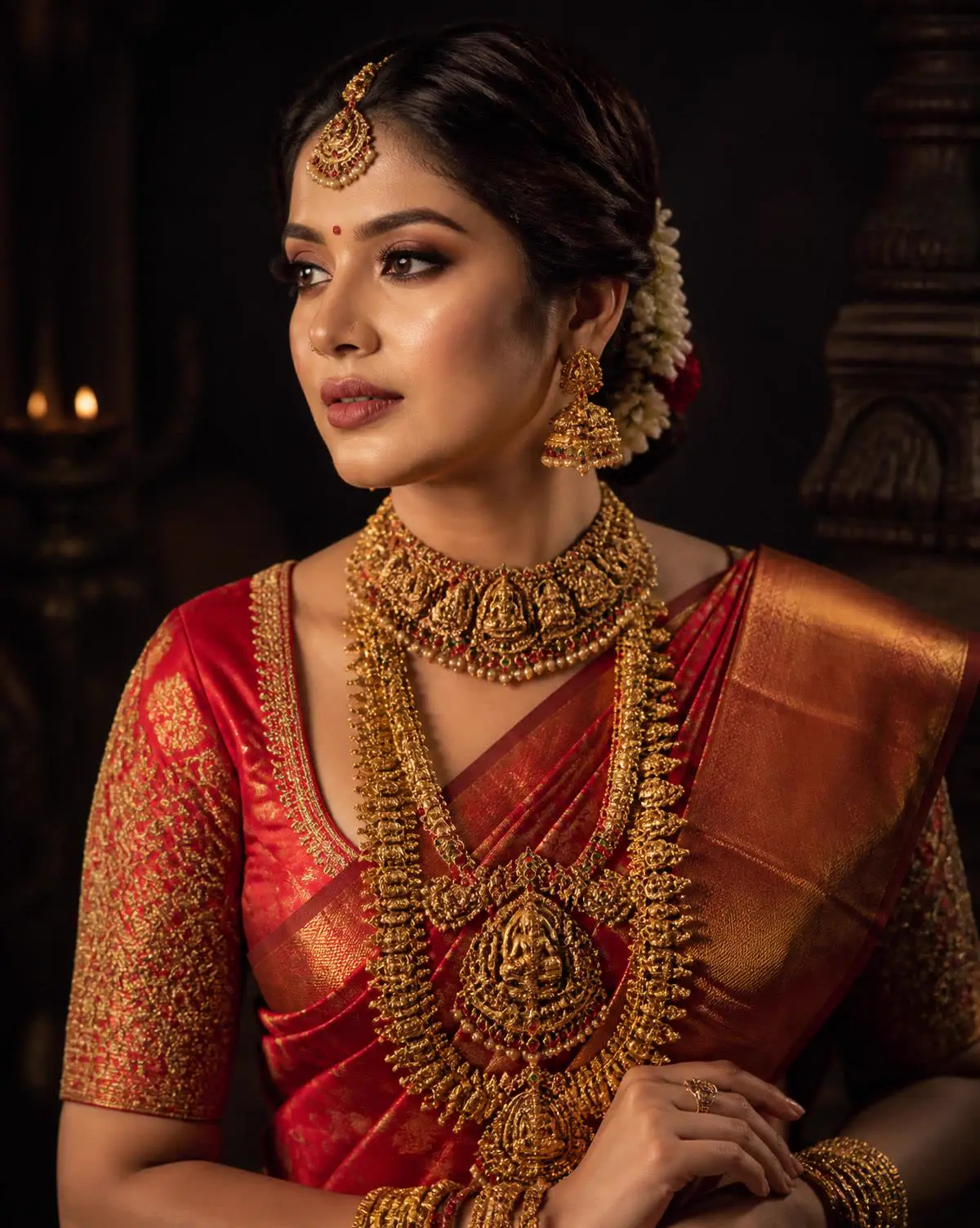
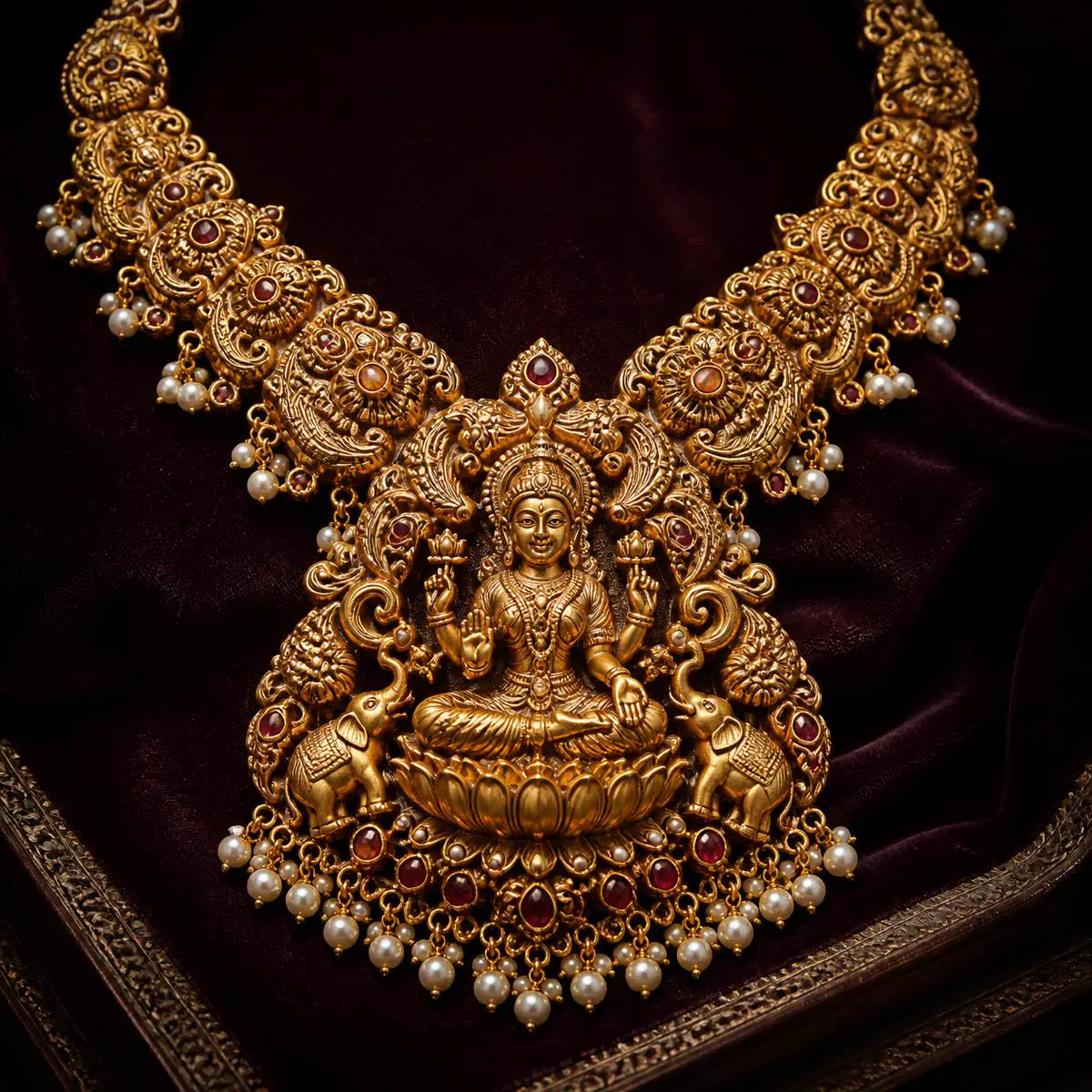
'Antique' in Indian jewellery describes a finish, not an age. The gold is given a matte, oxidised, slightly darkened surface that recalls temple jewellery centuries old. The technique is contemporary; the aesthetic is ancient. Most South Indian bridal sets are finished in antique gold.
Polki
Polki uses uncut, unpolished natural diamonds set in 22K or 24K gold foil. The diamonds retain their natural shape and refract light softly, which is why polki sets photograph so beautifully under candlelight. It is the signature jewellery of Mughal and Rajasthani traditions.
Kundan
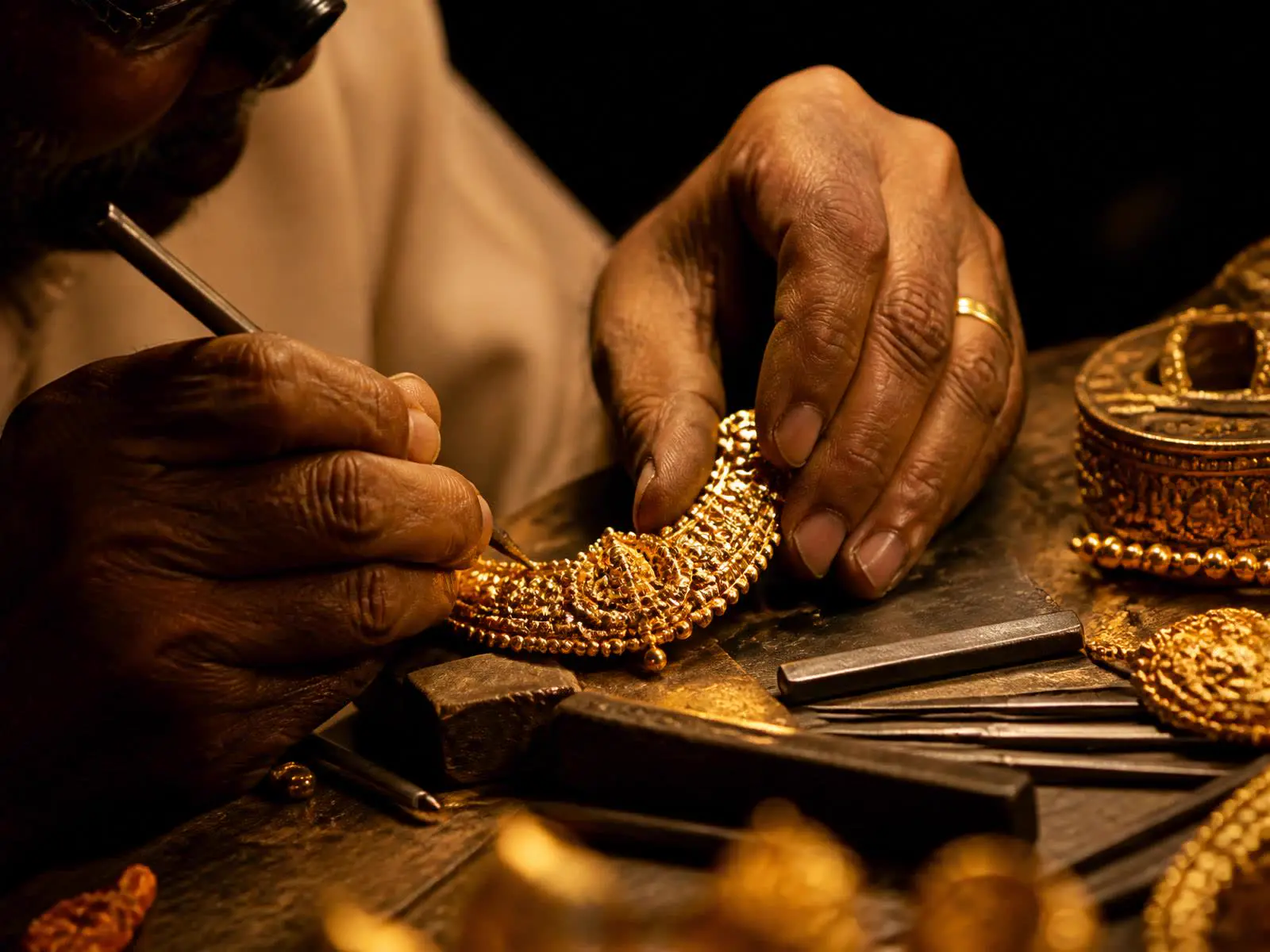
Kundan is a setting technique, not a stone. Pure gold foil is hammered around glass or natural stones to hold them in place — no prongs, no glue. The technique allows for layered, three-dimensional designs and is what makes traditional Indian wedding sets so distinctive.
Most heritage Indian bridal sets combine all three — an antique-finish 22K base, polki diamonds and kundan-set coloured stones.