A complete guide to South Indian temple jewellery
From Chola-era motifs to modern reinterpretations — understanding the language of temple jewellery.
The origins of temple jewellery
Temple jewellery began nearly a thousand years ago in the great temples of South India, when devotees commissioned ornaments to adorn the deities of Chola, Pandya and Vijayanagara shrines. The pieces were never meant to be ordinary — they carried sacred symbolism, were worked in 22-karat gold and were considered an offering as much as an ornament.
Over the centuries the same vocabulary travelled from the sanctum to the human form, first to bharatanatyam dancers performing in the temple precincts and then to brides celebrating life's most auspicious moments. Today the form continues to evolve, but the language remains intact.
Reading the motifs
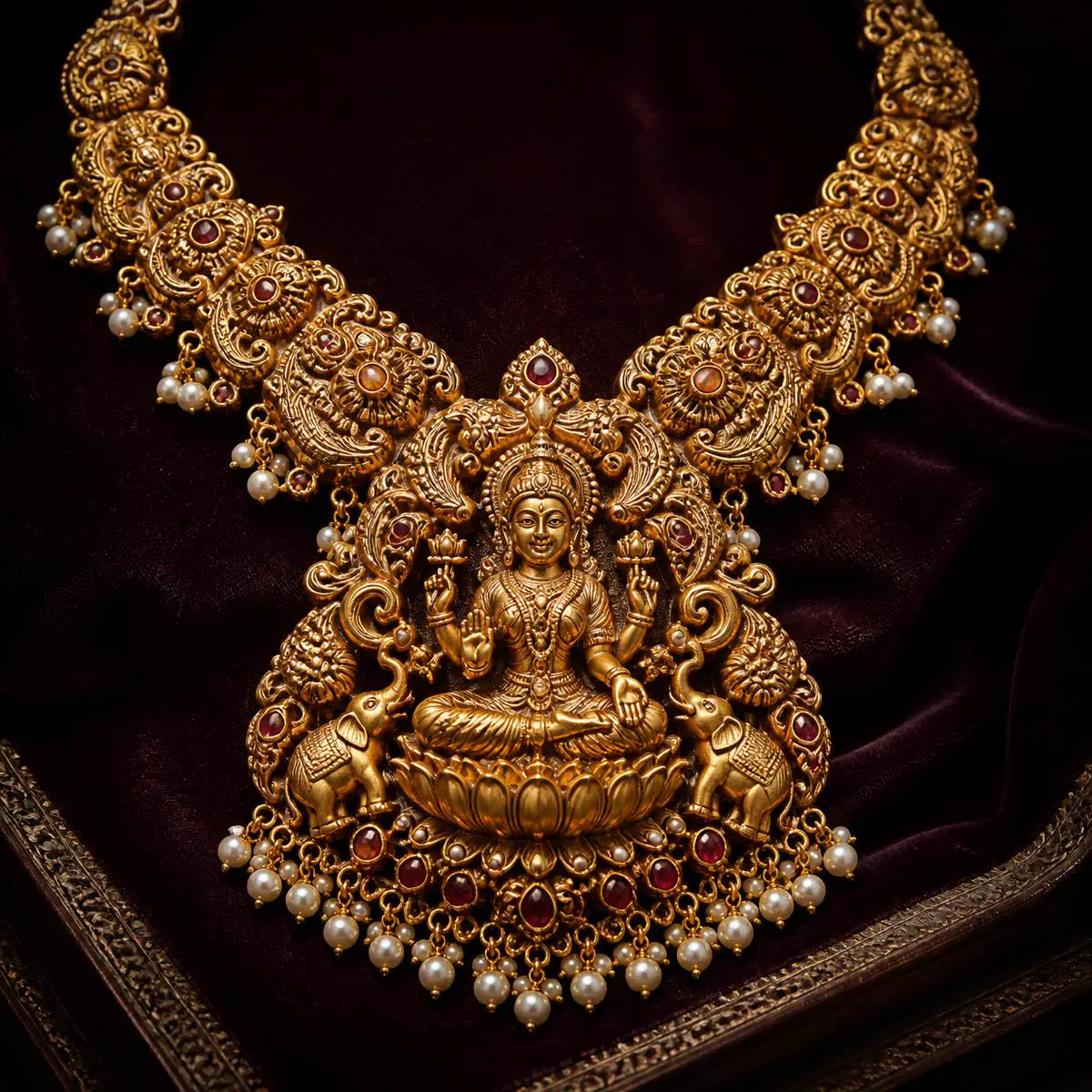
Every motif in temple jewellery is a sentence. Lakshmi pendants invoke prosperity, peacock and parrot forms speak of beauty and devotion, mango and paisley shapes celebrate fertility, while kasu coin strands recall ancient wealth blessed by the goddess.
Authentic temple pieces are built around hand-set uncut gemstones, granulated wirework and antique gold finishes that age gracefully. The weight is deliberate — these are heirlooms, not fashion.
How Ambaa Gold interprets the form
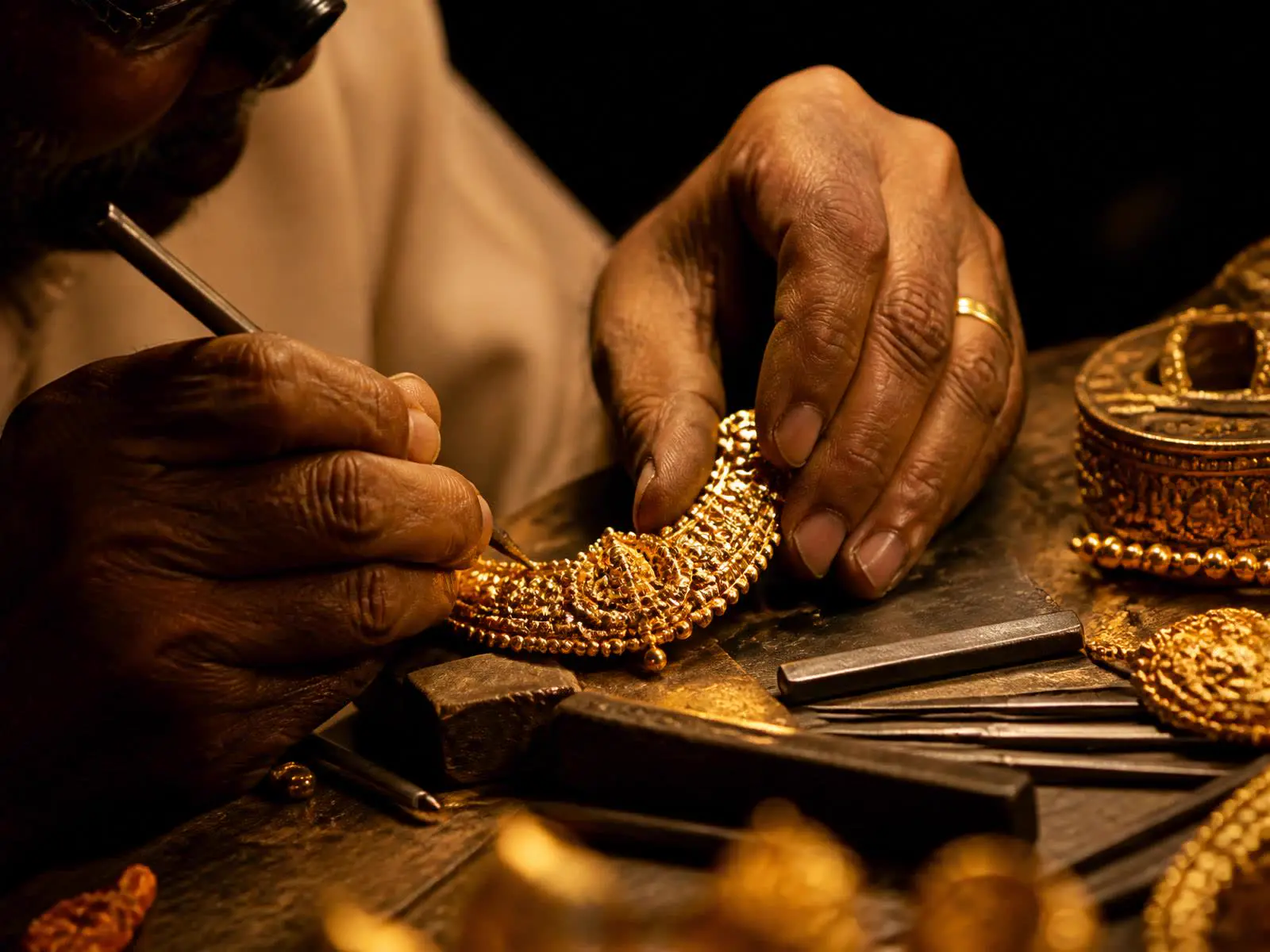
Our temple collection is hand-crafted at our Mumbai atelier by master karigars trained in the Nagercoil and Vadasery traditions. Every piece is 916 BIS hallmarked, finished by hand and signed by the artisan who completed it.
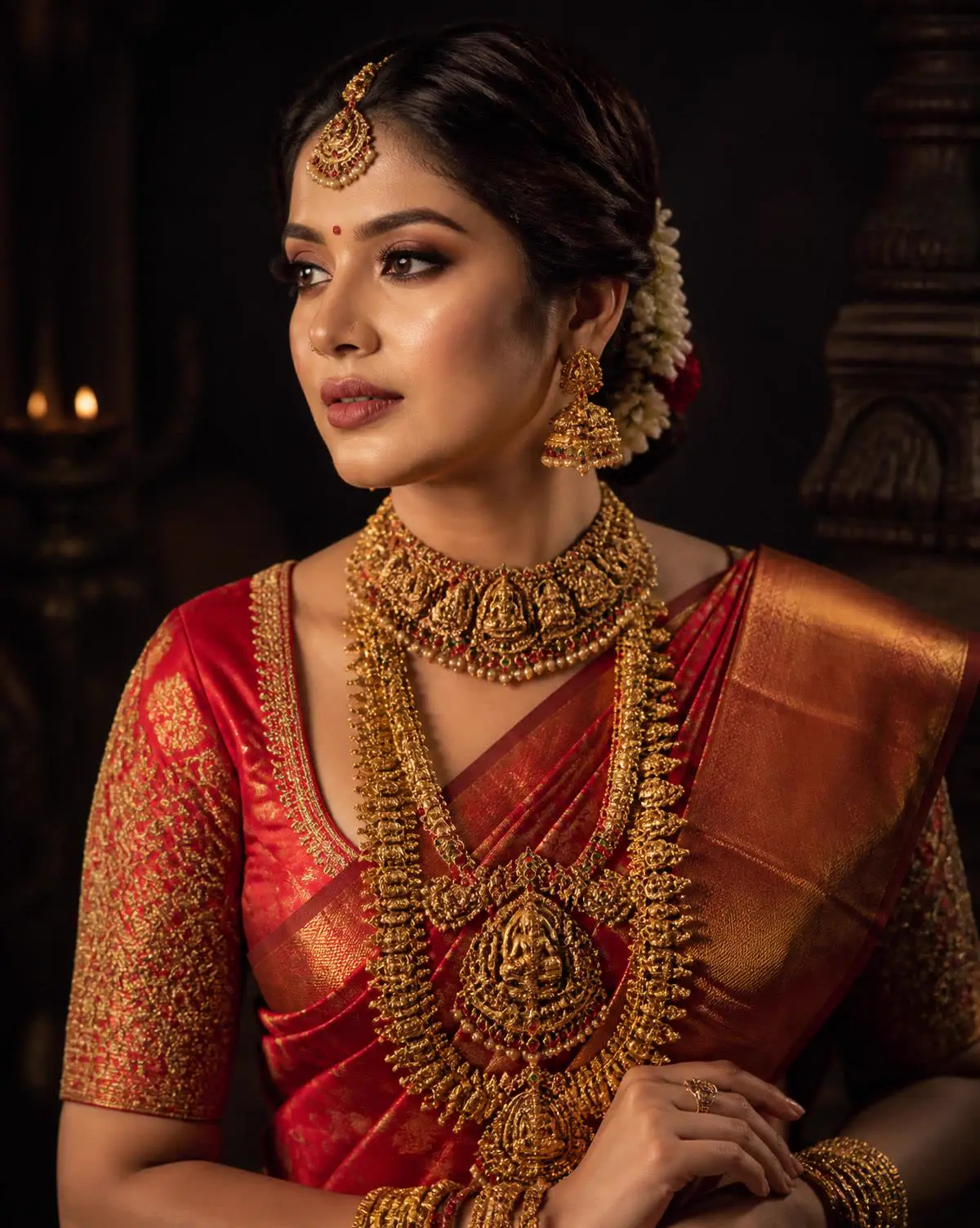
For brides we recommend a layered composition — a short choker, a medium-length kasu mala and a long Lakshmi haram — paired with matching jhumkas, vanki and nethichutti. The combination is timeless and unmistakably South Indian.