Gold making charges explained — how jewellers actually price a piece
What making charges cover, how they are calculated per gram or as a percentage, and what is fair in 2026.
What a making charge really pays for
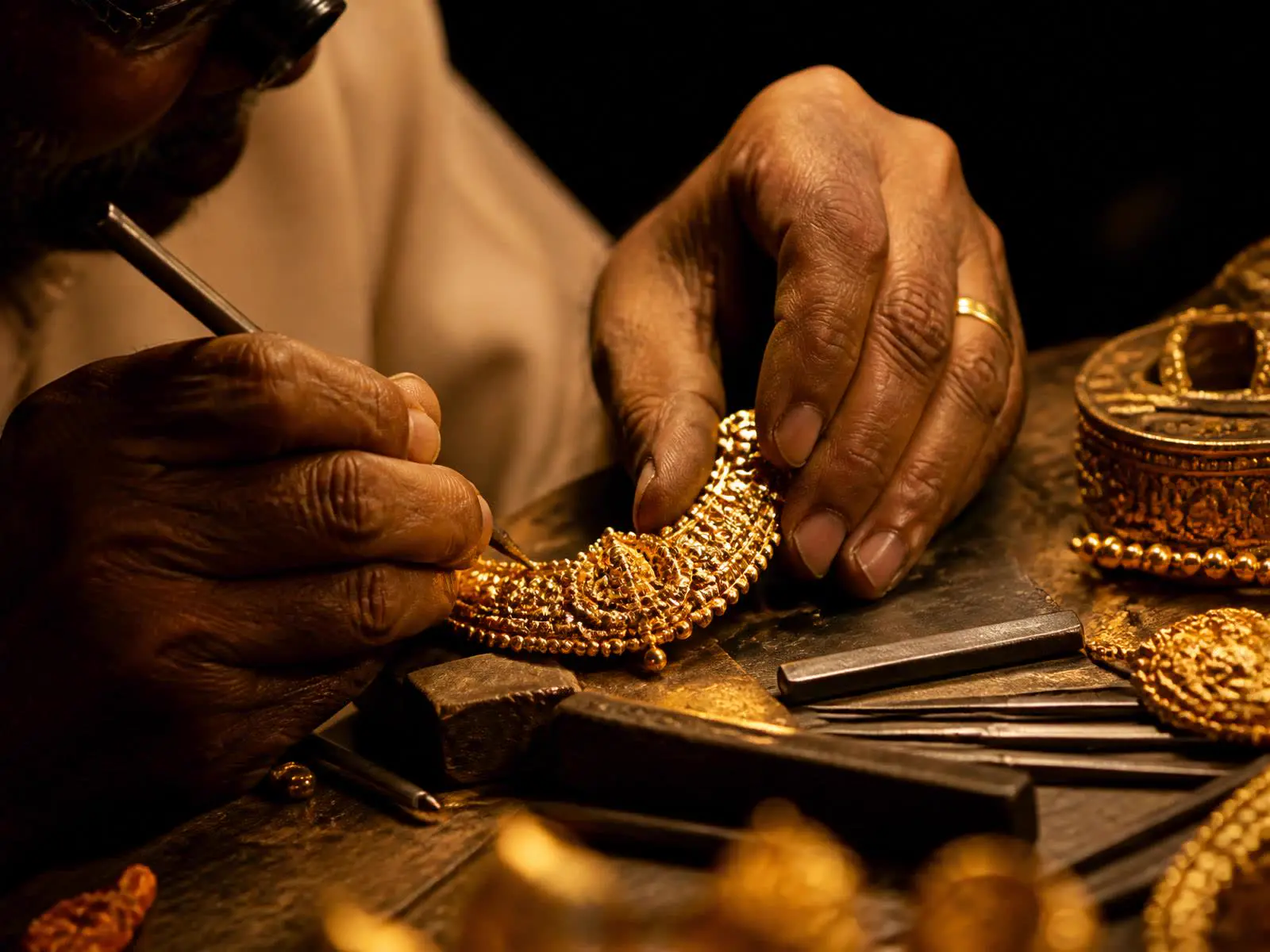
The gold rate you see quoted on a board is only the metal. A finished ornament also carries the labour of the karigar who drew the wire, set the stones, soldered the joints, polished the surface and finished the clasp. That labour, plus tooling, wax and casting loss, is what a making charge covers.
Because the work varies enormously between a plain machine chain and a hand-built Lakshmi haram, making charges are never a single number. The honest way to read a quote is to ask what the piece required, not simply what percentage was added.
Per gram or percentage — two ways of quoting the same thing
Per-gram making charges are common on machine-made items such as chains and plain bangles, where the labour is predictable. A fixed rupee amount per gram keeps the price stable whether gold is up or down.
Percentage making charges are used for handcrafted and design-heavy work. Here the charge is a percentage of the metal value, so it rises with the gold rate. For temple, antique and bridal pieces this reflects reality: heavier pieces need proportionally more hand-work.
Neither method is a trick. What matters is that the invoice states the purity, the net weight, the metal rate used, the making charge and the GST separately, so you can check the arithmetic yourself.
Why handmade South Indian work sits at the higher end
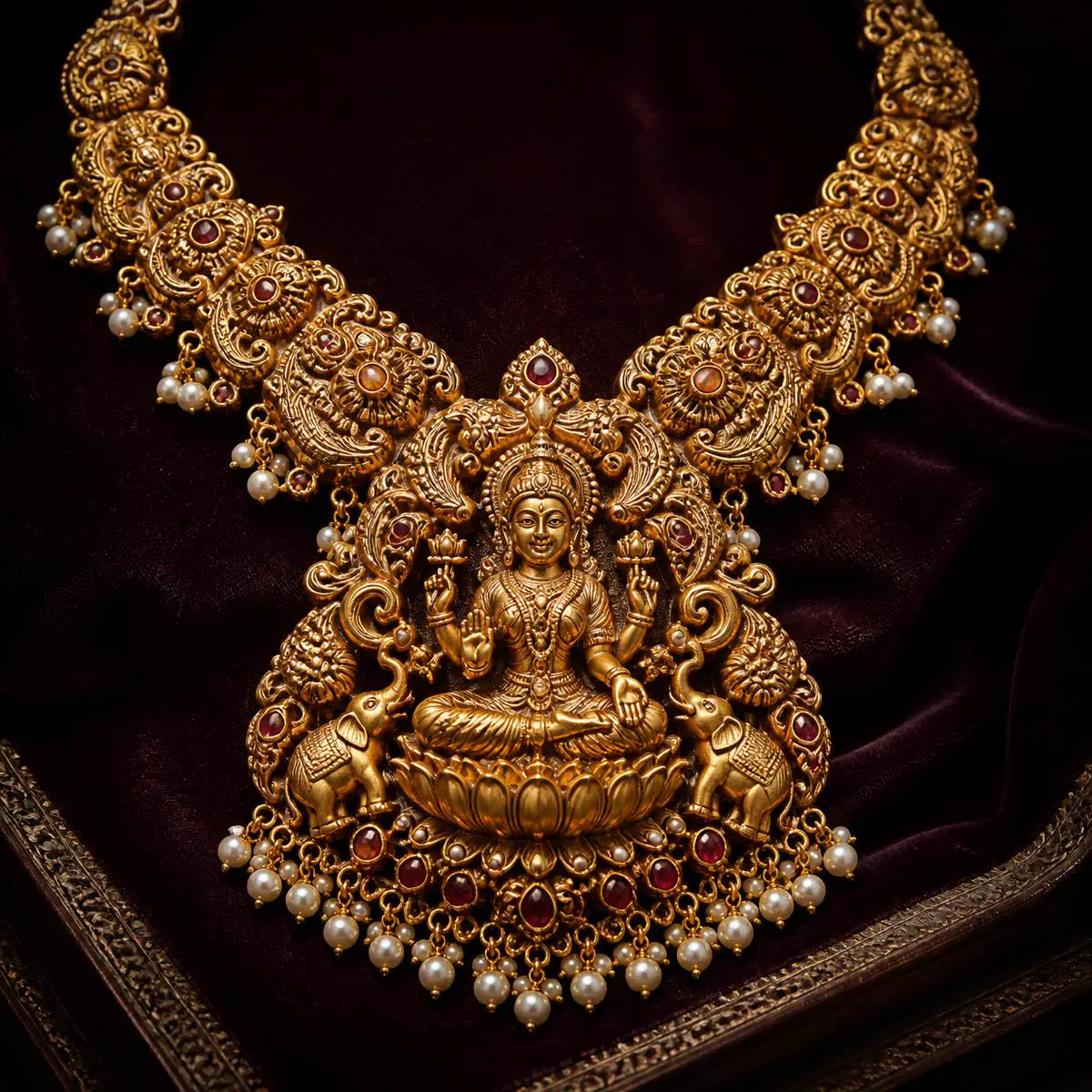
A Lakshmi kasu mala may carry more than a hundred individually struck and soldered coins. A nakshi temple choker involves repoussé work, kemp stone setting and antique finishing, each by a different specialist hand. That is weeks of skilled labour rather than hours of machine time.
At Ambaa Gold we quote wholesale making charges by design, not by blanket percentage, and we share the breakdown before production begins so a retailer can price their counter with confidence.
How to compare two quotes fairly
Put both quotes on the same footing: same purity, same net weight excluding stones, same metal rate for the day. Then compare the making charge alone. A quote that looks cheaper often uses a higher metal rate, includes stone weight in the gold weight, or omits hallmarking.
Always confirm the BIS hallmark, the HUID and the buy-back terms in writing. A slightly higher making charge on a hallmarked, well-finished piece is far better value than a cheap quote on unverified metal.
Frequently asked questions
- Are making charges negotiable?
- On machine-made items there is usually little room, because the labour is thin. On handcrafted and bulk wholesale orders there is more scope, especially for repeat designs where tooling is already made.
- Do making charges attract GST?
- Yes. In India GST applies to the total value of the ornament, which includes the metal value and the making charge. Ask for it as a separate line on the invoice.
- Are wholesale making charges lower than retail?
- Yes. Wholesale and OEM orders spread setup and tooling across a batch, so the per-piece labour cost falls. This is why retailers who buy directly from a manufacturer keep a healthier margin.